Where you fished
Note the location and the part of the water, such as a reed bed, a deep drop-off or a rocky point.
A few notes after each session can turn scattered evenings by the water into a story of slow discovery. This article explains a simple, low-effort way to keep a fishing journal.
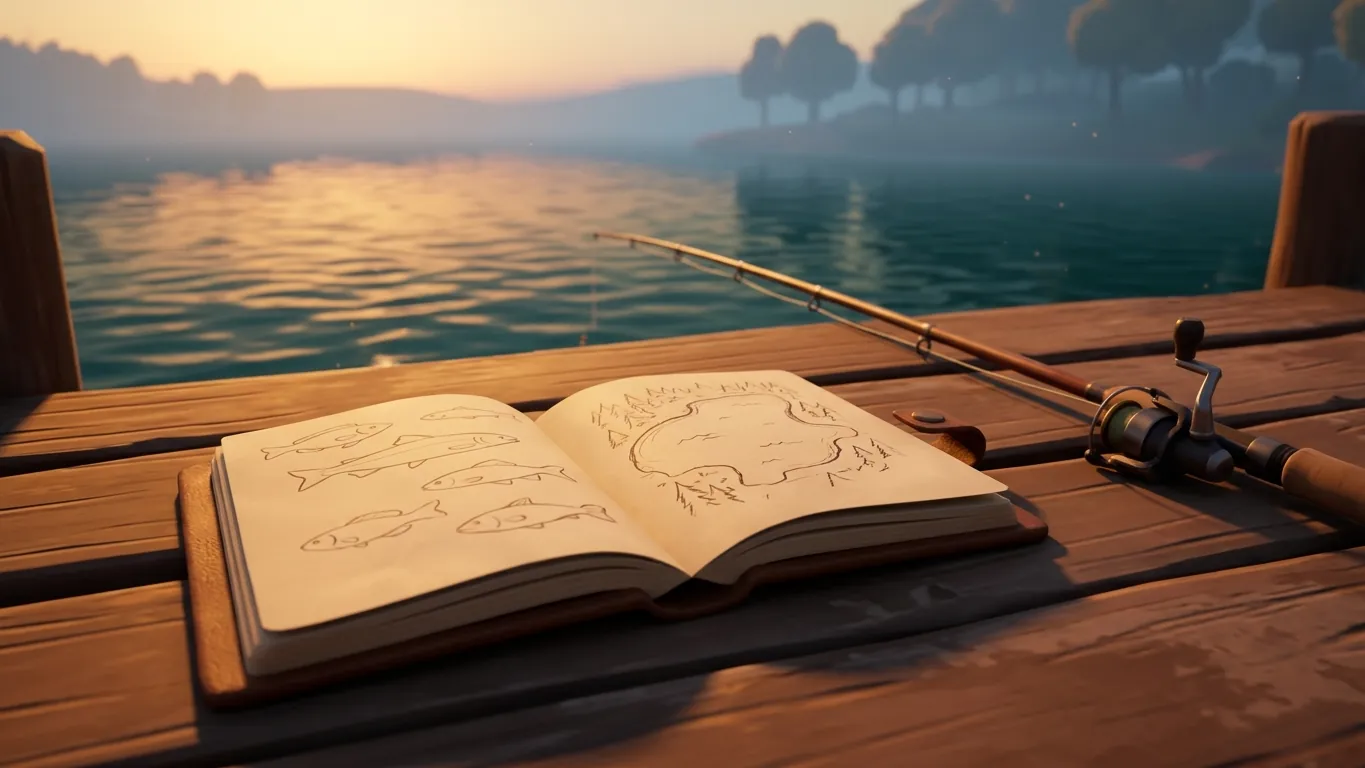
Fishing games involve a lot of small observations. A certain bait worked well at one spot. A species seemed to appear more often in the evening. A particular line kept snapping with larger fish. On their own, these details are easy to forget between sessions.
A journal gives them somewhere to live. Over time, your notes become a personal guide to the game, based entirely on your own experience in Ultimate Fishing Simulator. It also adds a gentle, reflective step to the end of each session, which can help the routine feel complete.
The journal does not need to be detailed or neat. Its only purpose is to help you remember and enjoy what you have learned.
A few short lines are enough. These four areas cover the most useful details.
Note the location and the part of the water, such as a reed bed, a deep drop-off or a rocky point.
Write down the in-game time of day and weather, since both can change how a spot behaves.
Record the rod, line, bait and depth you used, so you can repeat or adjust it later.
List what you caught and what got away, with a brief note on why a fish may have escaped.
There is no single correct format. Some players enjoy a small paper notebook kept beside the screen; writing by hand can feel like a natural part of winding down. Others prefer a note on their phone or a simple document on their computer, which is easy to search later.
Whatever you choose, keep the format light. If the journal starts to feel like homework, it will work against the calm spirit of the game. A date, a location and two or three observations are often all you need. On evenings when you do not feel like writing, simply skip it.
After a few sessions, patterns begin to appear. Perhaps one location gives you plenty of small fish but never the larger ones you hoped for. Perhaps a certain bait has not yet been tried in deeper water. These patterns can become gentle goals for future evenings.
Goals drawn from your own notes tend to feel more personal and more satisfying than generic targets. Instead of chasing the next unlock, you might decide to test a different depth at a familiar spot, or to land one fish of a species that has escaped you before. Each goal is small, clear and rooted in curiosity rather than pressure.
One quiet pleasure of a journal is reading it back. Early entries often show uncertainty: missed bites, lines breaking, confusion about bait. Later entries tend to reflect more confidence and a deeper understanding of the places you return to.
This record of slow improvement can be rewarding in its own right. It reminds you that progress in a fishing game comes from patience and attention, and that the evenings spent by the virtual water have added up to something. Whether your journal ends up a few pages long or fills a whole notebook, it becomes a gentle companion to your time in the game.
 Getting started with Ultimate Fishing Simulator
A calm beginner's guide to Ultimate Fishing Simulator: choosing a first spot, learning to cast and reel, and building confidence without rushing.
Read more
 Finding a comfortable pace in fishing games
How to set a relaxed rhythm in fishing games: shorter sessions, gentle goals and simple habits that keep virtual fishing restful rather than rushed.
Read more
 Choosing rods, reels and bait without the overwhelm
A clear guide to rods, reels, line and bait in fishing games, with tips on choosing gear for a reason and upgrading thoughtfully over time.
Read more