One goal per session
Choose a single aim, such as trying a new bait or exploring one stretch of shoreline. Everything else becomes optional.
Fishing games can be calm or surprisingly demanding, depending on how you play them. This article looks at simple ways to keep your sessions relaxed and enjoyable.
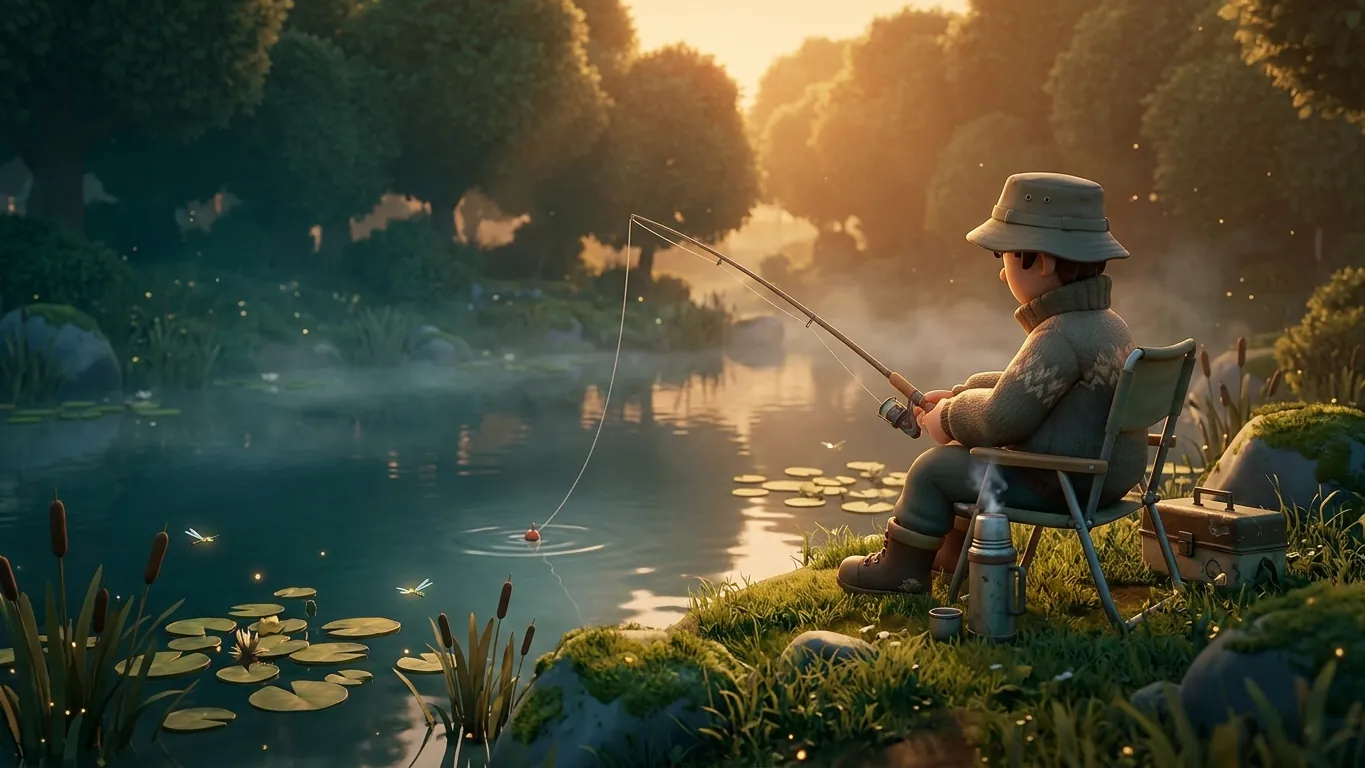
A fishing game like Ultimate Fishing Simulator does not force you to hurry. There are rarely strict timers, and nothing bad happens if you sit by the water for a while without catching anything. Yet many players still find themselves rushing: checking which waters are locked, comparing equipment, and trying to fill every session with as many catches as possible.
There is nothing wrong with playing efficiently if that is what you enjoy. But if you came to the genre looking for quiet, it helps to notice when the pace of your play has drifted away from what you wanted. The game itself offers a calm space. Whether it feels calm depends a great deal on the expectations you bring to it.
A few signs suggest that a session has become more hurried than you might like. You may find yourself switching locations every few minutes because the fish are not biting fast enough. You may feel frustrated when a catch escapes, rather than curious about why. Or you may close the game feeling slightly tense, even though you spent the evening on a virtual lake.
These feelings are common and they are not a problem in themselves. They are simply useful signals. When you notice them, it can be a good moment to slow down, change your approach or end the session and come back another time. A calm game should leave you feeling at ease, and small adjustments often bring that feeling back.
Try one or two of these ideas and see which ones suit you.
Choose a single aim, such as trying a new bait or exploring one stretch of shoreline. Everything else becomes optional.
Remain at the same spot for the whole session. You will notice more detail and spend less time travelling or comparing.
Lower background distractions and listen to the water, wind and wildlife. Ambient sound naturally sets a slower rhythm.
Decide in advance when you will stop, perhaps after a set time or at in-game nightfall, so the session closes gently.
Much of the advice you find about games is about efficiency: the fastest route, the most rewarding method, the quickest unlock. In a fishing game, efficiency can quietly take the pleasure out of the experience. If every cast is measured against a target, waiting becomes something to endure rather than enjoy.
One helpful shift is to treat waiting as part of the activity itself. The minutes between bites are when you notice the colour of the sky, the movement of reeds or the way light falls across the water. In real fishing, many people describe these moments as the heart of the hobby, and virtual fishing can offer a similar kind of attention.
This does not mean ignoring progress. It simply means letting progress follow from enjoyment rather than replacing it.
Your ideal pace is not fixed. On some evenings you may want a long, focused session, carefully testing setups and working towards a particular fish. On others you may want nothing more than a few quiet casts before bed. Both are valid ways to play.
It can help to check in with yourself before you start. Ask what kind of evening you are looking for and shape the session around that answer. Over time, you will build a sense of what works for you, and the game will feel less like a task and more like a familiar place you can return to whenever you like.
 Choosing rods, reels and bait without the overwhelm
A clear guide to rods, reels, line and bait in fishing games, with tips on choosing gear for a reason and upgrading thoughtfully over time.
Read more
 Reading the water before you cast
Learn to read virtual water calmly: depth, shoreline shape, cover, time of day and weather, plus a simple way to experiment and remember results.
Read more
 A calm evening fishing routine
Ideas for turning virtual fishing into a relaxed evening ritual, from preparing your space to choosing a session length that leaves you at ease.
Read more